RTD Beverage Trends: OEM/ODM Solutions | Gasaco
The RTD beverage market is shifting from basic refreshment needs toward health, experience, and sustainable packaging.
Brands need to turn trends into products with stable formulations, suitable packaging, and commercial production capability.
Gasaco provides beverage OEM/ODM solutions from concept direction and R&D to finished private-label products.
Consumers now evaluate beverages based on ingredients, sugar content, sensory experience, convenience, and packaging recyclability. For F&B businesses, this shift directly affects portfolio strategy, ingredient selection, production technology, and brand positioning.
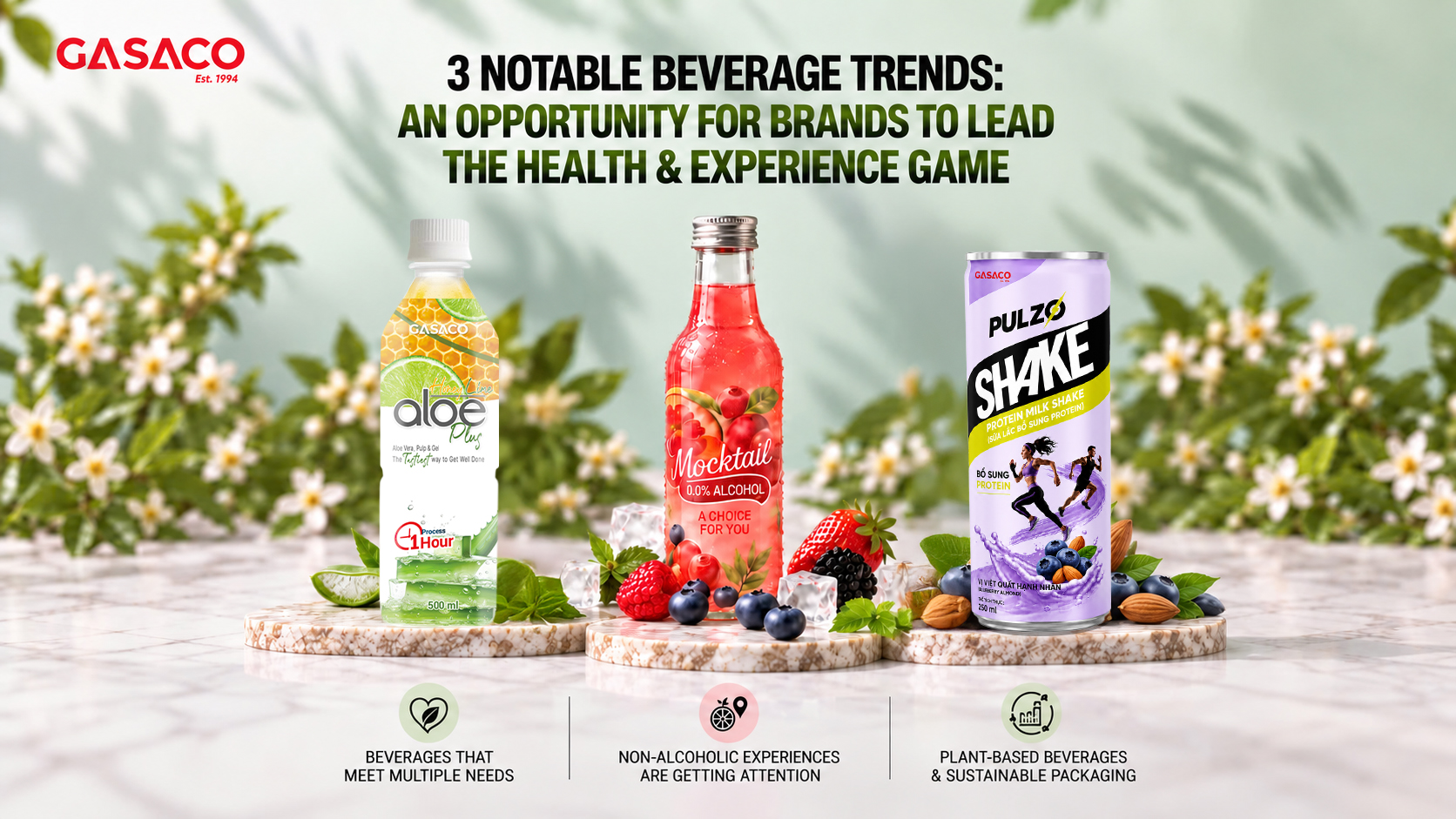
The three trends below are development directions worth considering for brands looking to invest in bottled beverages, non-alcoholic drinks, plant-based products, and functional beverages.
⚖️ Which RTD beverage trends are creating growth opportunities for F&B brands?
❓ Why are functional beverages no longer just low-sugar products?
Functional & Wellness Drinks have moved beyond the concept of low sugar. Consumers are looking for products that fit their daily routines, nutritional goals, and more proactive lifestyles.
Common formulation directions include Reduced Sugar, Zero Sugar, added vitamins, minerals, botanical extracts, functional water, and herbal teas. However, all benefit claims need to be developed in accordance with the actual ingredients, product registration dossiers, and current labeling regulations.
| Development Direction | Parameters to Control | Commercial Value |
| Functional Water | Active ingredient stability, pH, aftertaste | Suitable for daily consumption and convenience channels |
| RTD Herbal Tea | Clarity, astringency, color and flavor stability | Creates differentiation through natural ingredients |
| Low-Sugar Fruit Beverages | Sweetener system, acidity, fruit juice content | Meets sugar-reduction demand while maintaining sensory quality |
| Vitamin-Fortified Beverages | Vitamin stability during heat processing and storage | Adds nutritional value to the portfolio |
The challenge is not only adding functional ingredients. The formulation needs to be validated for ingredient interactions, sedimentation risk, color changes, flavor changes, and stability throughout the intended shelf life.
❓ What usage occasions should brands consider when designing wellness beverages?
Businesses need to clearly define the usage context: refreshment during physical activity, office consumption, after-meal drinking, or replacement for high-sugar beverages. This information determines volume, sweetness level, flavor profile, packaging, and target price.
Products intended for frequent consumption should prioritize light taste, a clean finish, and portable formats. Experience-driven products can develop more complex flavor layers, carbonation, or distinctive textures.
⚙️ What factors should differentiate the new generation of non-alcoholic beverages?
❓ Why is the Alcohol-Free Experience an RTD segment worth investing in?
The trend toward lower alcohol consumption creates opportunities for RTD mocktails, sparkling drinks, and fermented teas. Consumers are not only looking for alcohol-free products; they also want a sophisticated mixed-drink experience that is convenient and ready to consume.
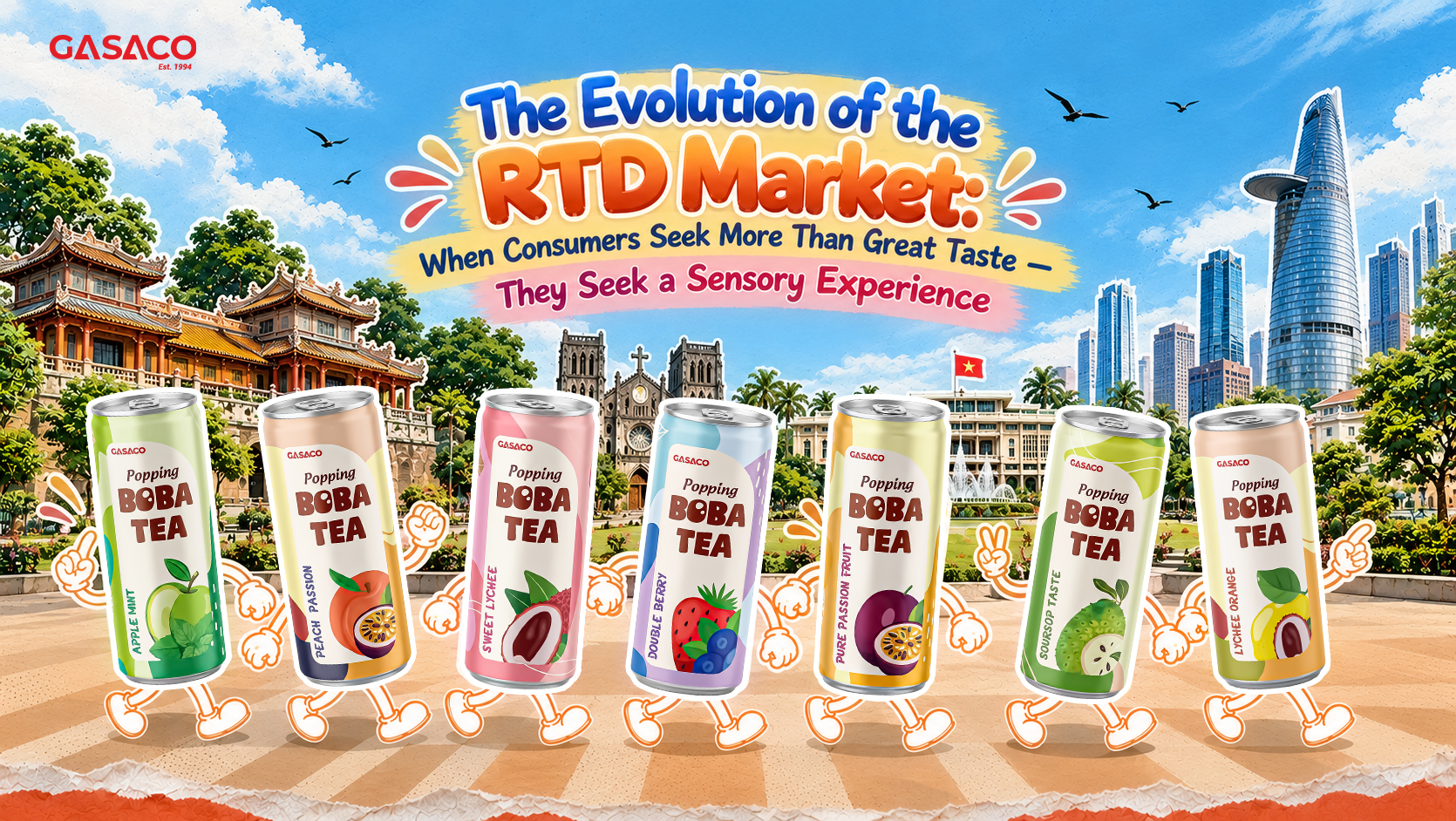
Suitable development directions include Sparkling Mocktails made with fruit and herbs, Virgin Mojito RTD with lime and mint, multi-flavor Kombucha, or beverages combined with toppings such as aloe vera, jelly, and popping boba.
❓ What should businesses control when manufacturing RTD mocktails or kombucha?
Experience-driven non-alcoholic beverages need to maintain consistent quality across production batches. Key parameters include Brix, pH, carbon dioxide level for carbonated products, uniformity of particulate or gel ingredients, and flavor retention after production.
| Product Category | Technical Risk | Control Approach |
| Sparkling Mocktail | Carbonation loss, flavor changes, sweet-acid imbalance | Set suitable blending and filling parameters |
| Virgin Mojito RTD | Mint aroma degradation, harsh lime taste | Optimize the flavor system and acid balance |
| Kombucha | Fermentation variability, bottle pressure, acidity | Control the process and microbiological parameters |
| Texture Drinks | Sedimentation, phase separation, texture changes | Evaluate structural stability and production-line compatibility |
Packaging type is part of the consumption experience. Aluminum cans are suitable for carbonated beverages and on-the-go use. PET bottles support a wide range of volumes. Glass bottles are suitable for products that emphasize experience or a premium image.
♻️ What criteria should guide the development of plant-based beverages and sustainable packaging?
❓ What opportunities do plant-based beverages offer beyond traditional nut milk?
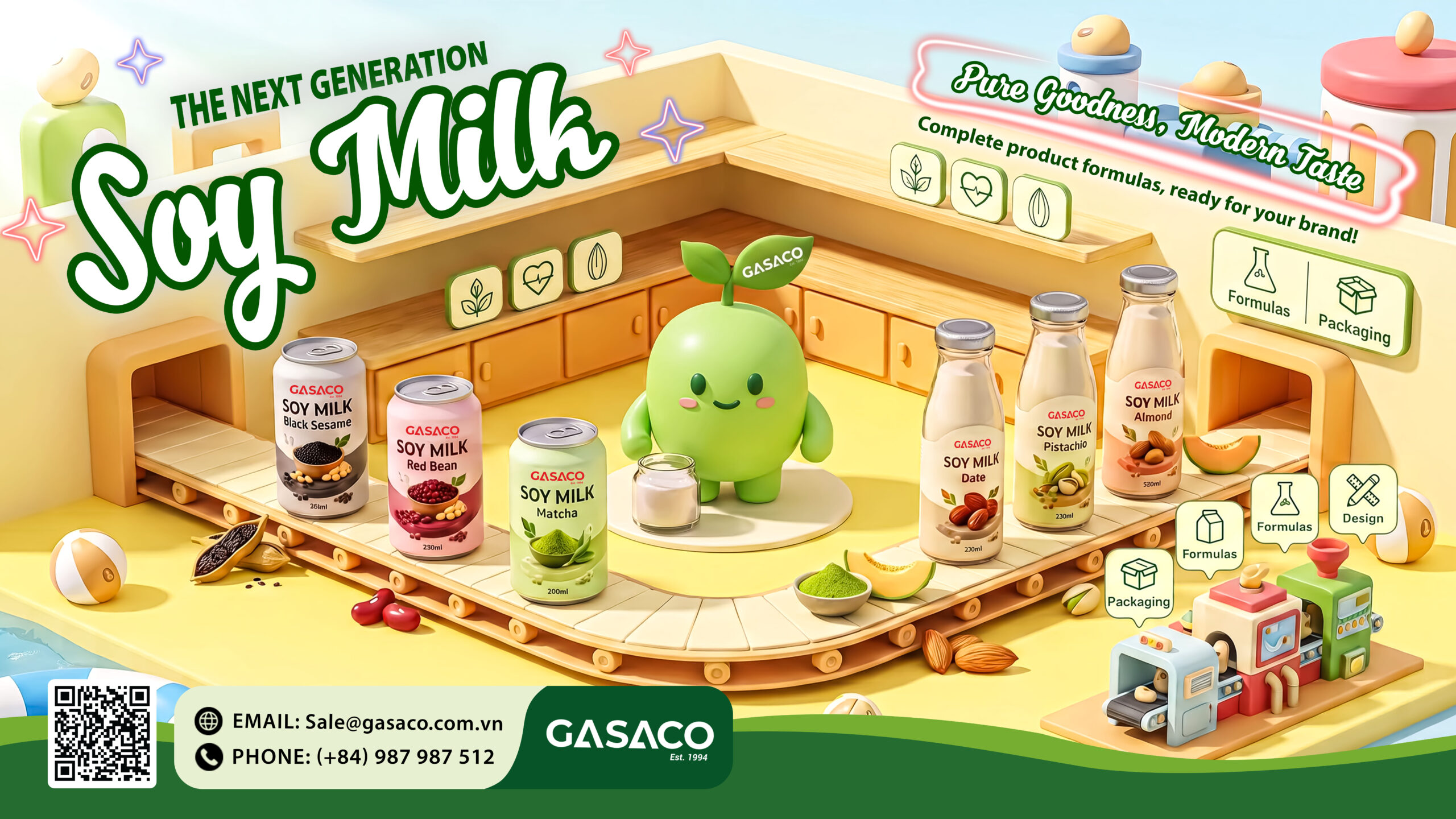
Plant-based beverages are not limited to soy milk or basic nut milk. Brands can develop oat milk, coconut milk, blended soy milk, tropical fruit smoothies, multi-flavor fruit beverages, and plant-based lattes combined with coffee, tea, or botanical ingredients.
The technical challenge is to maintain smoothness, limit phase separation, control the characteristic aroma of plant-based bases, and ensure stable sensory quality. Formulations need to be tested under actual storage conditions before scaling up production.
❓ Should RTD beverages use rPET bottles, glass bottles, or aluminum cans?
There is no single packaging format suitable for every formulation. Businesses need to evaluate product characteristics, sales channels, logistics costs, recycling targets, and export market requirements at the same time.
| Packaging Type | Suitable For | Evaluation Criteria |
| rPET/PET Bottles | Fruit beverages, tea, functional water | Light weight, transportation, recyclability |
| Glass Bottles | Mocktails, kombucha, experience-driven products | Weight, logistics costs, product image |
| Aluminum Cans | Sparkling mocktails, carbonated beverages | Light barrier performance, cooling, filling requirements |
✅ What should F&B businesses prepare to bring an RTD idea into production?
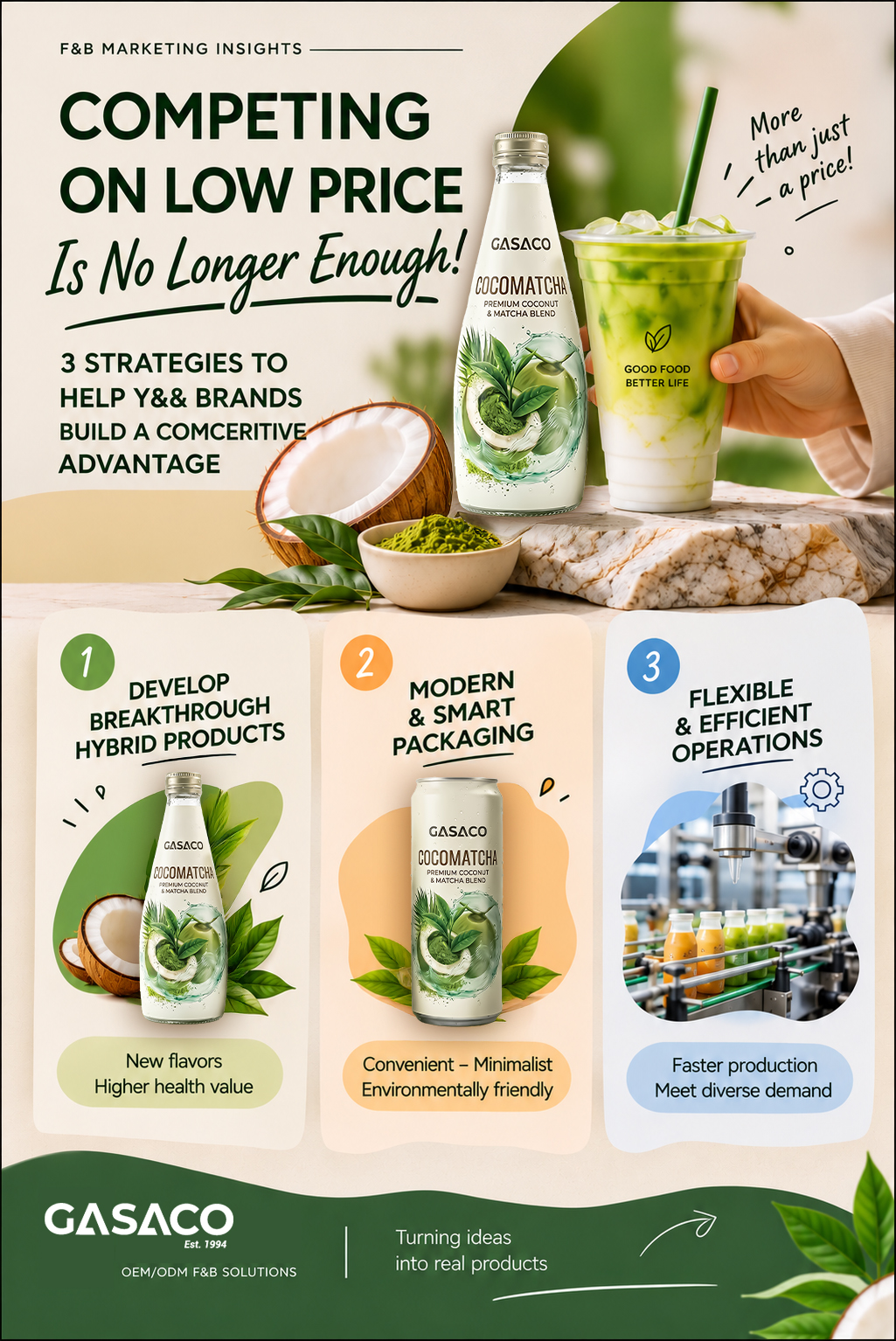
A trend-driven idea only creates value when it becomes a stable product with a reasonable cost structure and commercial viability. Businesses should define target customers, flavor, functionality, target price, volume, packaging, expected production quantity, and distribution market from the beginning.
Next, the development team should assess raw material supply, quality specifications, stability, shelf life, storage conditions, and compatibility with the production line. This process helps reduce risks when scaling up to commercial production.
Gasaco provides OEM/ODM beverage manufacturing services for fruit beverages, smoothies, plant-based beverages, mocktails, kombucha, and functional water. Businesses can choose PET bottles, glass bottles, or aluminum cans according to product direction and distribution channels.
GASACO – Comprehensive OEM/ODM Beverage Solutions
Core Capabilities: Specialized in bottled beverage manufacturing. Providing comprehensive packaging solutions from glass bottles and PET bottles to aluminum cans.
Services: Exclusive brand distribution and full-service OEM manufacturing. Flexible production scale.
- Phone: 0987987512
- Address: 934 D1 Street D, Cat Lai Industrial Park, Cat Lai Ward, Ho Chi Minh City
- Website: gasaco.vn