OEM/ODM Beverage Contract Manufacturing for Private Label Brands
Businesses looking to launch private-label beverages often face pressure related to capital investment, formulation development, packaging, and manufacturing capabilities.
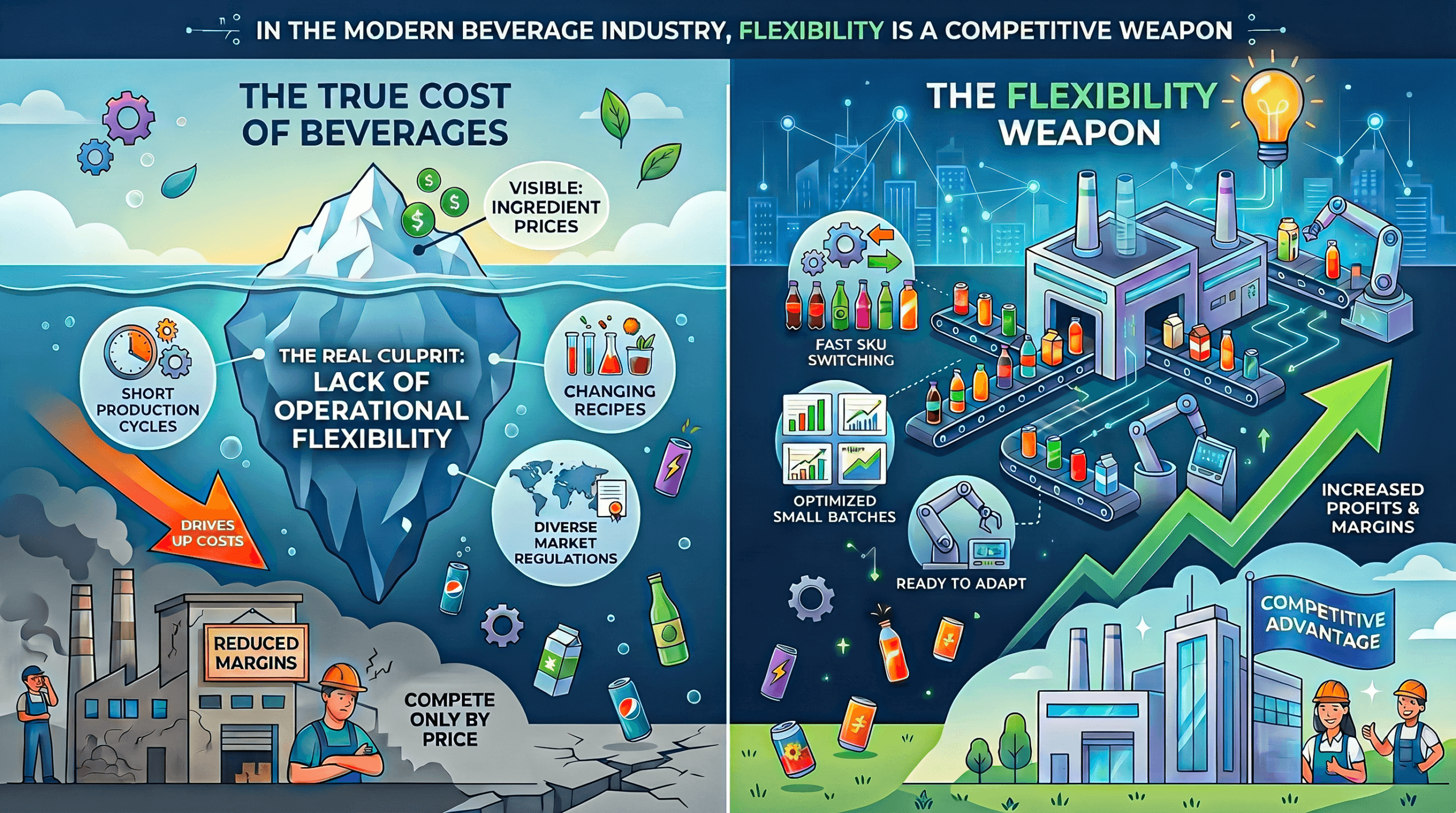
OEM/ODM beverage contract manufacturing allows businesses to outsource product development and production to a factory with established production lines and quality control procedures.
GASACO supports the process from product ideation and sample development to packaging and production according to order requirements.
Developing a beverage brand requires more than just a flavor concept. Products must be evaluated for stability, raw materials, packaging specifications, labeling, food safety requirements, and delivery capabilities. Building an in-house manufacturing facility involves substantial fixed costs and an extended preparation period.
Partnering with a beverage contract manufacturing facility under the OEM/ODM model allows businesses to focus on market research, distribution channel development, and brand building, while production is carried out according to agreed technical specifications.
What Risks Do Businesses Face When Investing in In-House Beverage Production?
Establishing a manufacturing facility requires capital for factory premises, filling lines, water treatment equipment, warehousing and logistics, technical personnel, and quality management systems. This investment requires stable production volumes to optimize operational efficiency.
Beyond investment costs, businesses must also manage risks during formulation development. A product may require multiple testing rounds to evaluate sensory characteristics, stability, product-packaging compatibility, and storage conditions before mass production.
| Criteria | In-House Manufacturing | OEM/ODM Partnership |
| Initial investment | High, requiring investment in factory premises and production lines | Reduces the need for fixed-asset investment |
| Preparation time | Longer due to the need to establish operational systems | Leverages the factory’s existing manufacturing capabilities |
| Formulation development | Requires an in-house team and testing processes | Collaborative development based on product objectives |
| Quality control | Requires the development of internal procedures and specialized personnel | Implemented under the factory’s quality management system |
| Product portfolio expansion | Requires additional resources and operational capabilities | Offers flexibility in product testing and packaging formats |
What Is the Difference Between OEM and ODM Beverage Manufacturing?
OEM beverage manufacturing is suitable for businesses that already have a formulation, technical specifications, or a clearly defined product concept. The factory receives the requirements and handles manufacturing, filling, and packaging under the customer’s brand.
ODM beverage manufacturing is suitable for businesses that have a market concept but need support in developing the finished product. The factory can collaborate with the customer to propose formulations, ingredients, container sizes, packaging types, and production solutions.
Should Businesses Choose OEM or ODM for a New Beverage Product?
OEM is suitable for brands with clearly defined product specifications, including flavor, volume, label design, and commercialization plans. ODM is more suitable for businesses seeking to shorten product development time, requiring prototype samples, or lacking finalized technical specifications.
Many projects can begin with ODM to establish the formulation and packaging specifications, then transition to OEM once the product is finalized and ready for production scale-up.
What Services Should a Beverage Contract Manufacturer Provide?
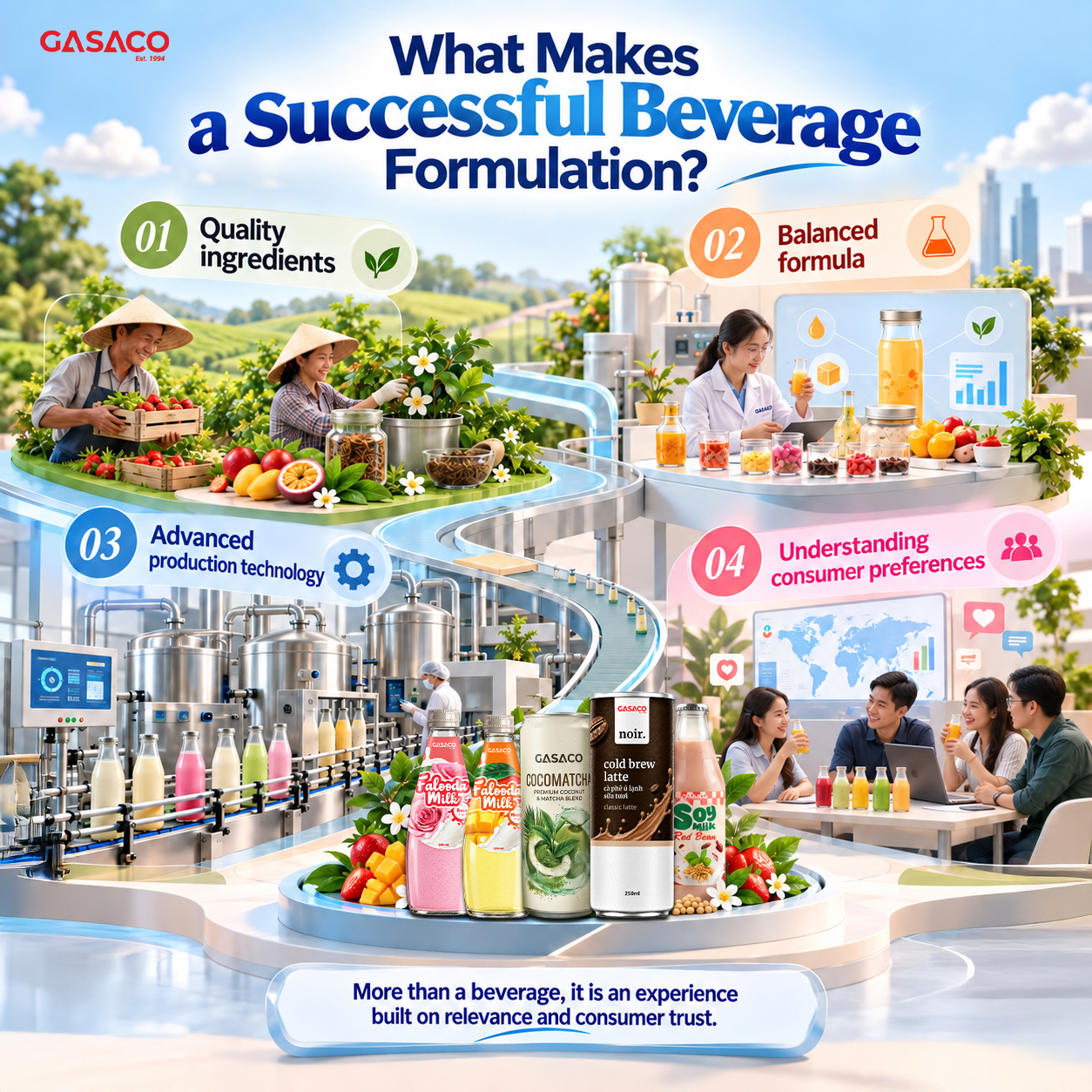
A beverage contract manufacturing project requires systematic management of key activities, including product positioning, formulation, raw materials, packaging, labeling, carton specifications, quality requirements, projected production volumes, and delivery schedules.
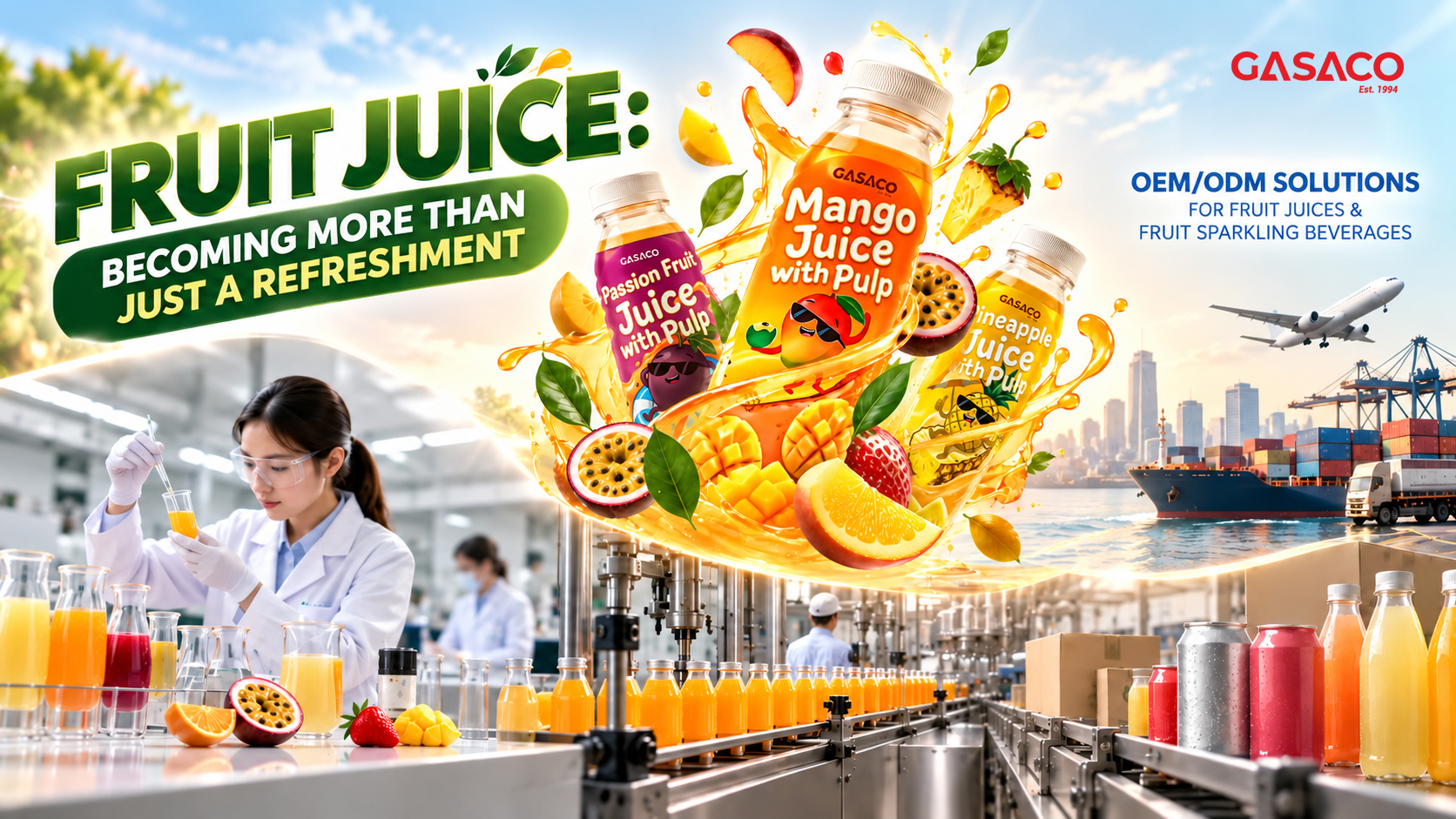
GASACO supports businesses in assessing project requirements, proposing product solutions, developing samples, selecting packaging, and organizing production. Beverage formulations can incorporate ingredients such as coconut jelly, aloe vera, or other ingredients aligned with the brand’s positioning.
What Specifications Must Be Finalized Before Mass Production?
Before confirming an order, businesses should finalize the product category, flavor, key ingredients, volume, packaging format—whether glass bottles, PET bottles, or aluminum cans—packaging configuration, label design, and acceptance criteria. Finalizing these specifications at the outset helps minimize project changes and control additional costs.
How Does GASACO Manage Quality Control in Beverage Contract Manufacturing?
Product quality must be controlled throughout the process, from raw materials and incoming water to blending, filling, packaging, and finished products. Sensory attributes, packaging specifications, and product requirements should be clearly defined to establish a basis for quality inspections during implementation.
GASACO applies quality management and food safety systems in accordance with standards such as ISO and HACCP, as applicable to its manufacturing operations. Businesses can work with the factory to define technical requirements that suit their products and target markets.
What Is the OEM/ODM Beverage Manufacturing Process at GASACO?
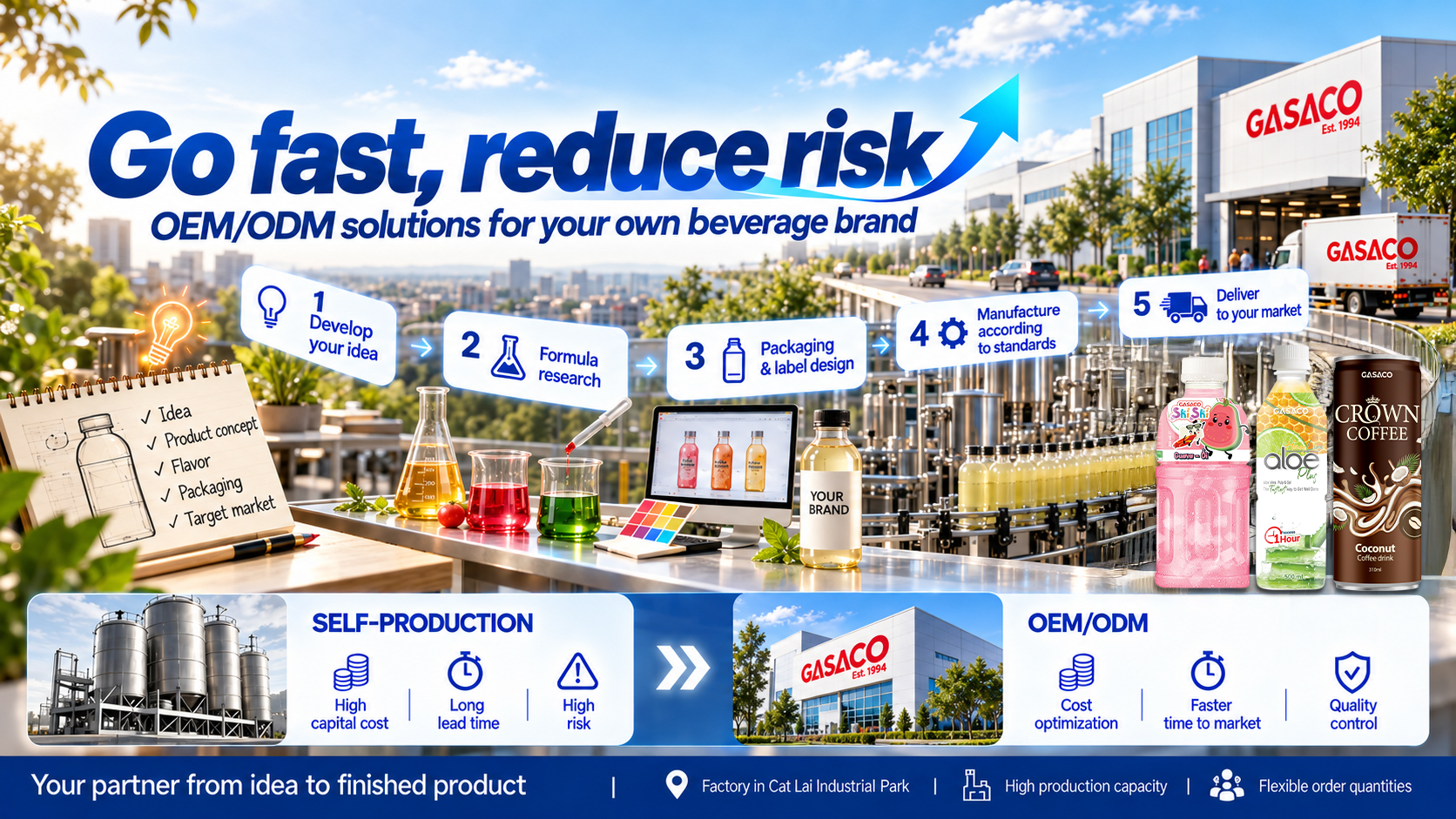
Step 1: Define product requirements. The business provides information about target customers, sales channels, price positioning, beverage category, and projected production volume.
Step 2: Propose formulations and packaging. The factory provides recommendations on formulation, ingredients, container sizes, and packaging options aligned with the brand’s positioning.
Step 3: Develop product samples. Samples are used to evaluate flavor, texture, color, packaging, and suitability for commercial objectives. Sample development support is subject to the terms of each project.
Step 4: Finalize labeling and production specifications. Both parties agree on packaging configurations, label design, product information, and quality control criteria. Label design support is provided on a case-by-case basis.
Step 5: Manufacture and deliver. The factory organizes production according to the confirmed order, monitors progress, and coordinates delivery in line with the agreed schedule.
Why Should Businesses Evaluate a Factory’s Capabilities Before Choosing an OEM/ODM Partner?
A contract manufacturing partner should demonstrate manufacturing capacity, product development capabilities, and transparent collaboration procedures. Comparing unit prices alone may cause businesses to overlook risks related to inconsistent product quality, production capacity limitations during scale-up, or delays in bringing products to market.
GASACO operates a factory in Cat Lai Industrial Park, Ho Chi Minh City, Vietnam, supporting businesses in developing private-label beverage products under the OEM/ODM model. To identify a suitable solution, businesses should discuss their product category, packaging, production volume, and target market objectives directly with the company.
GASACO – Comprehensive OEM/ODM Beverage Solutions
Core capabilities: Specialized in bottled beverage manufacturing. Comprehensive packaging solutions covering glass bottles, PET bottles, and aluminum cans.
Services: Exclusive private-label distribution and turnkey OEM contract manufacturing. Flexible production capacity.
- Phone: 0987987512
- Address: 934 D1, Duong D Street, Cat Lai Industrial Park, Cat Lai Ward, Ho Chi Minh City, Vietnam
- Website: gasaco.vn